The catalogue number comes first
A stamp lot is identified by its Stanley Gibbons, Scott or ACSC number before anything else, and serious bidders search by it. The heading has to carry it exactly as the specialist catalogue prints it.
Markets · Stamps & Postal History
Philatelic bidders read a lot description the way a specialist writes it: catalogue number, condition, certificate. Auctionomy gives every lot the room to say all three, on a website that carries your house's name rather than a marketplace's.
How your bidders buy
A stamp lot is identified by its Stanley Gibbons, Scott or ACSC number before anything else, and serious bidders search by it. The heading has to carry it exactly as the specialist catalogue prints it.
Unmounted mint, mounted mint or fine used; margins, centring, perforations and gum all move the estimate. Bidders expect faults stated plainly and a scan clear enough to check them.
Postal history is bought on route, rate and postmarks: origin, destination, backstamps, censor and transit markings. A cover needs both sides photographed and its markings described.
Catalogued your way
Description, estimate, condition and provenance are separate parts of every lot on Auctionomy, and each one shows on the lot page. The entry shown here is an illustration, written the way the trade writes it.
Illustrative lot · fictional
A fine used example cancelled by a numeral obliterator, with good colour for this printing. A collector's example from an old South Australia collection.
Estimate A$400–600
Your sale on Auctionomy
Every lot carries a description, a low and high estimate, a reserve, and separate condition and provenance notes, so a certificate or an ex-collection line has its own place on the lot page.
Front and back of a cover, the gum side of a mint stamp, a block with its marginal markings: add as many images as the lot needs.
A philatelic sale can run to hundreds of lots of singles, sets and collections. Run it as a timed sale and the close extends when a late bid lands, so no lot is lost to the last second.
Bidders leave their limit and the engine bids for them in your increments, up to that limit, the way a book bid has always worked.
Your trade, your house
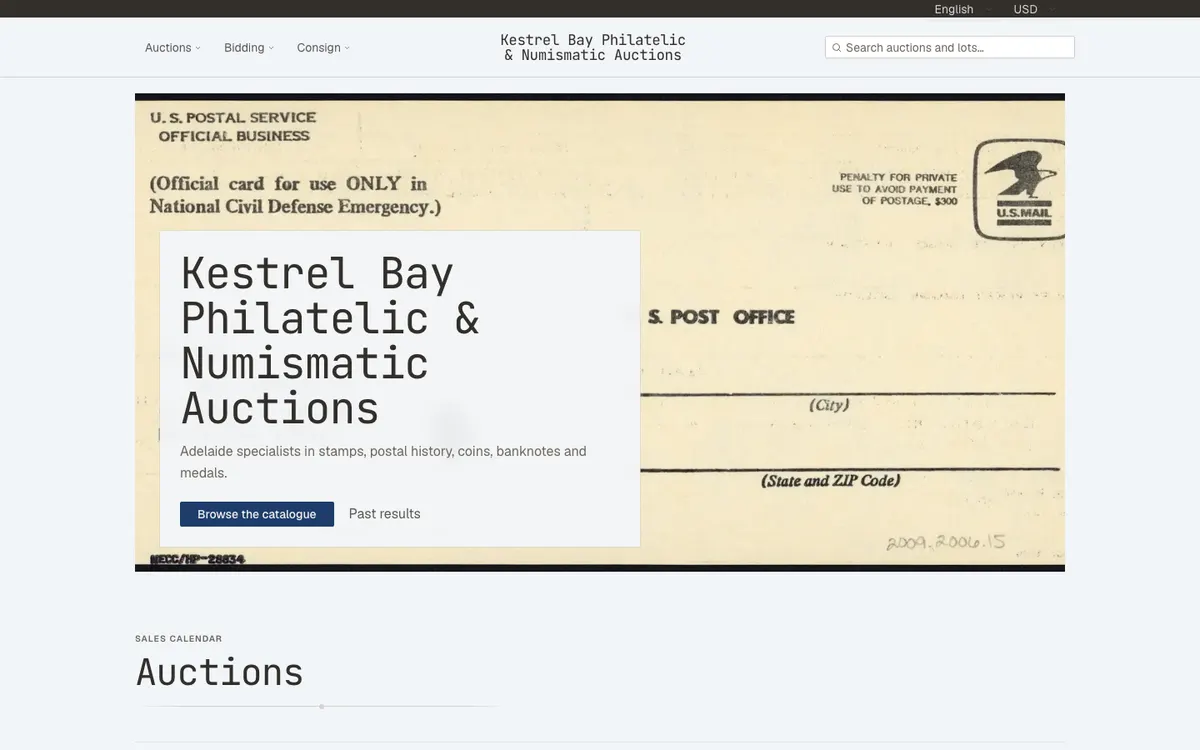
Kestrel Bay Philatelic & Numismatic Auctions is a demonstration house: fictional, built on Auctionomy to show how a house specialising in stamps & postal history looks on the platform. Its name, colours, typeface and page layout are its own, assembled from the same components every house uses. Yours would carry your name, your logo and your look, on your own domain.
A flat subscription, agreed with your house. Your bidders register with you, and the buyer's premium you set is yours.