
Markets / Antiquities & Archaeology
Antiquities offered with their provenance where bidders can read it
Auctionomy runs an antiquities house's whole business online: its own website, its catalogue, its timed and live sales and its bidders, in one place and under the name your consignors already trust.
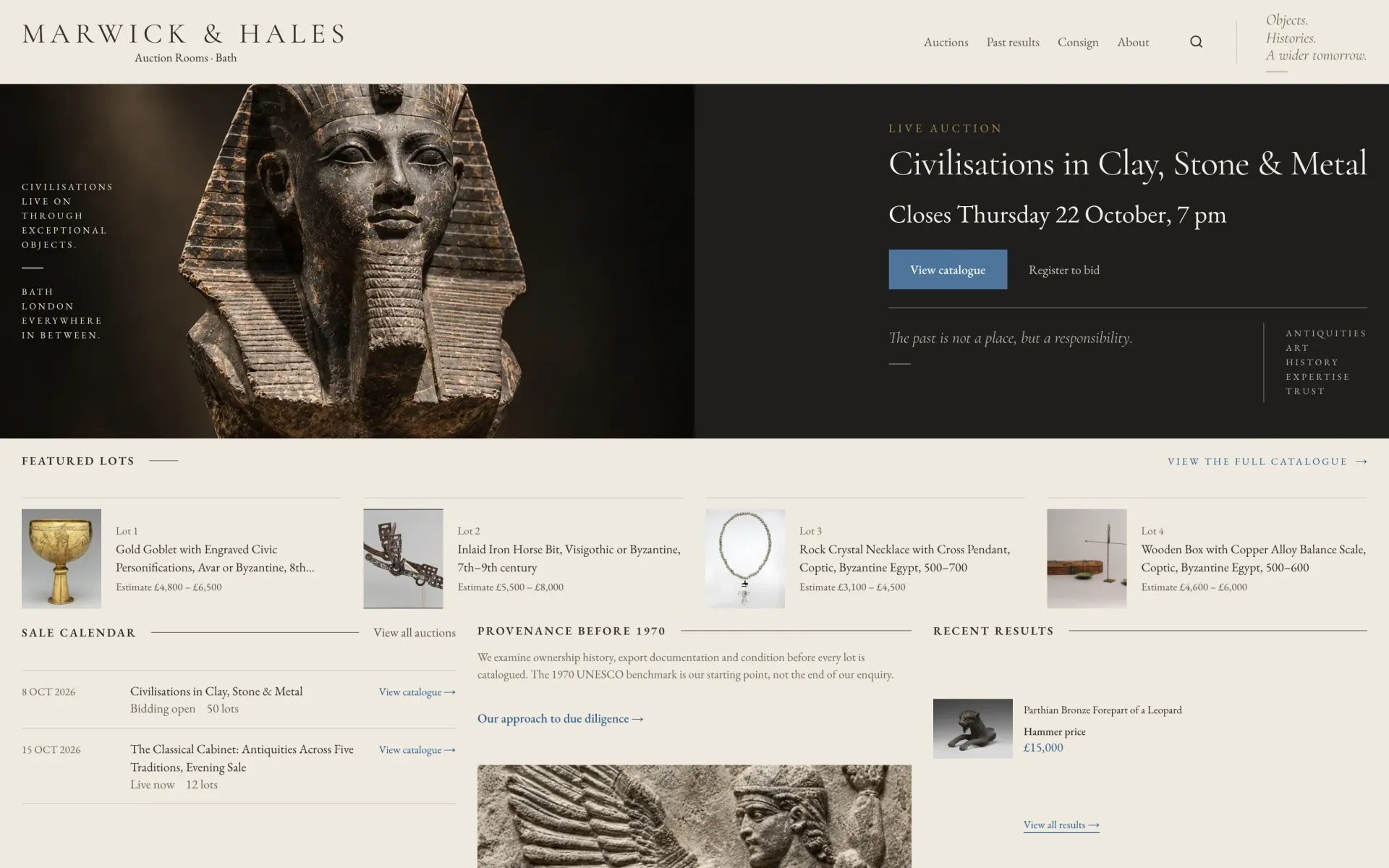
Marwick & Hales Auction Rooms, Bath. A demonstration house built on Auctionomy.
Why change how a good house sells
Your standard of due diligence has not changed. Where your bidders sit has.
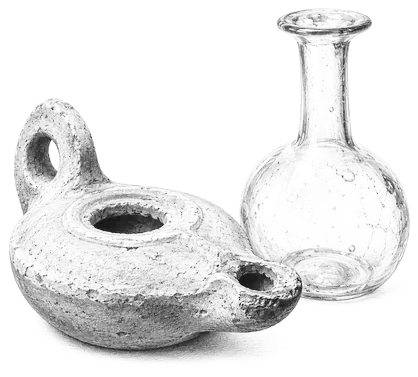
Your bidders are no longer only in the room
Collectors, dealers and their advisers follow antiquities sales from wherever they are. A house that cannot take their bids online either loses them or sends them somewhere else to find you.
A marketplace rents you an audience
It lists your antiquities under its own name, keeps the bidder's account and charges a share of what you sell, with fees for each sale and lot on top. The relationship you built becomes theirs.
Your name is the asset
Consignors come to you for a careful attribution, a documented ownership history and the estimate you will stand behind. That reputation should be the first thing a bidder sees, on your own address.
Auctionomy is the third way: your own house online, with the software to run every sale yourself.
Prepare each lot once
Write the entry the way you always have. It appears on your website, in your timed sale and on the rostrum exactly as you wrote it.
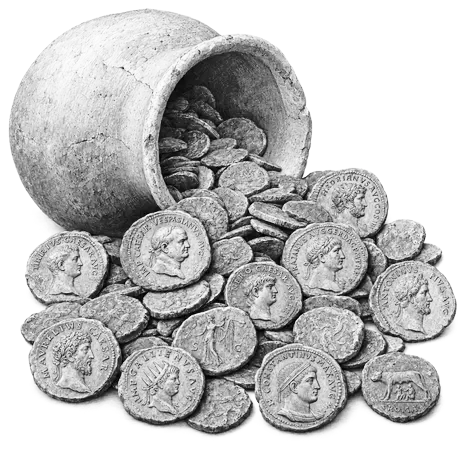
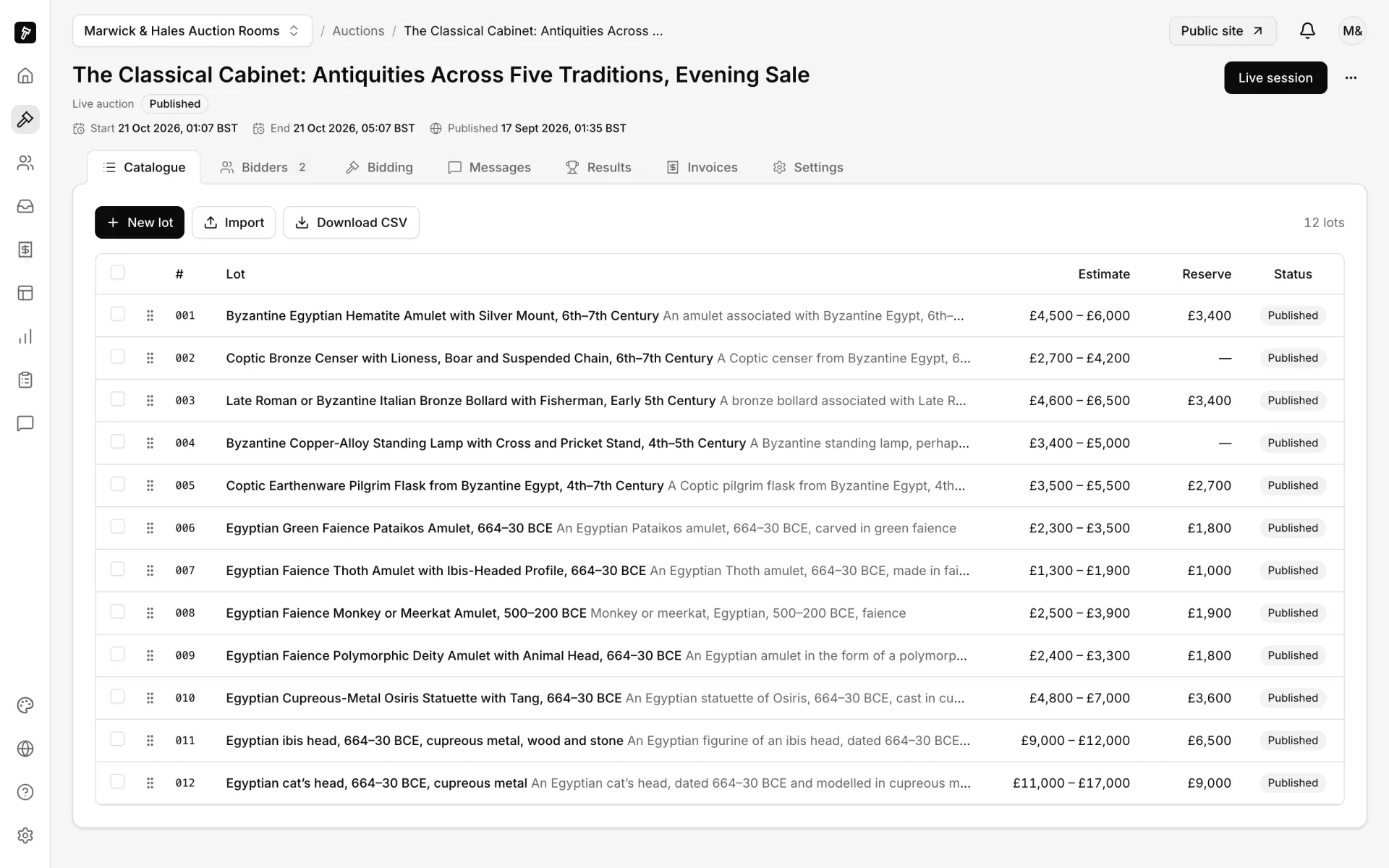
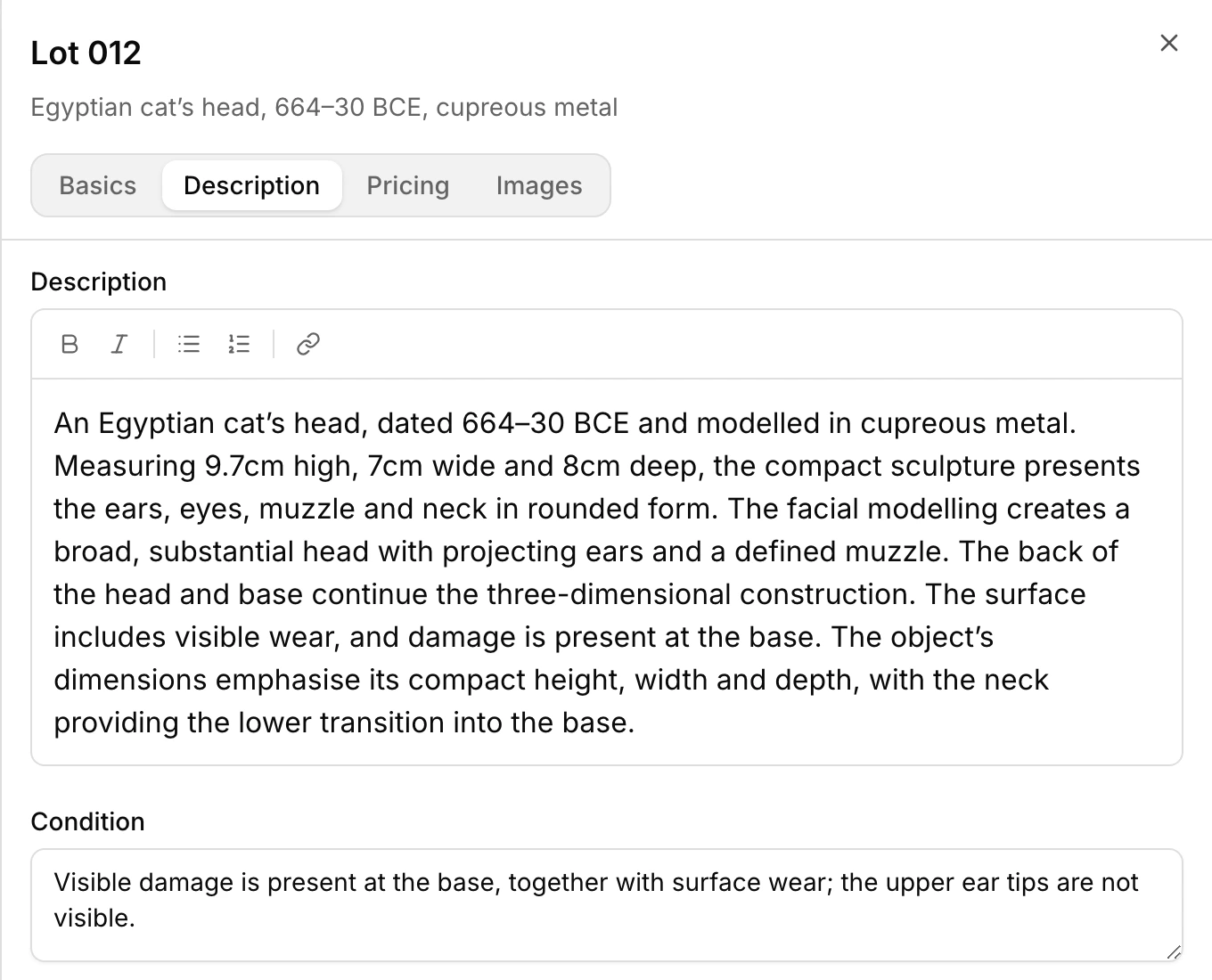
Catalogued once, in the dashboard.
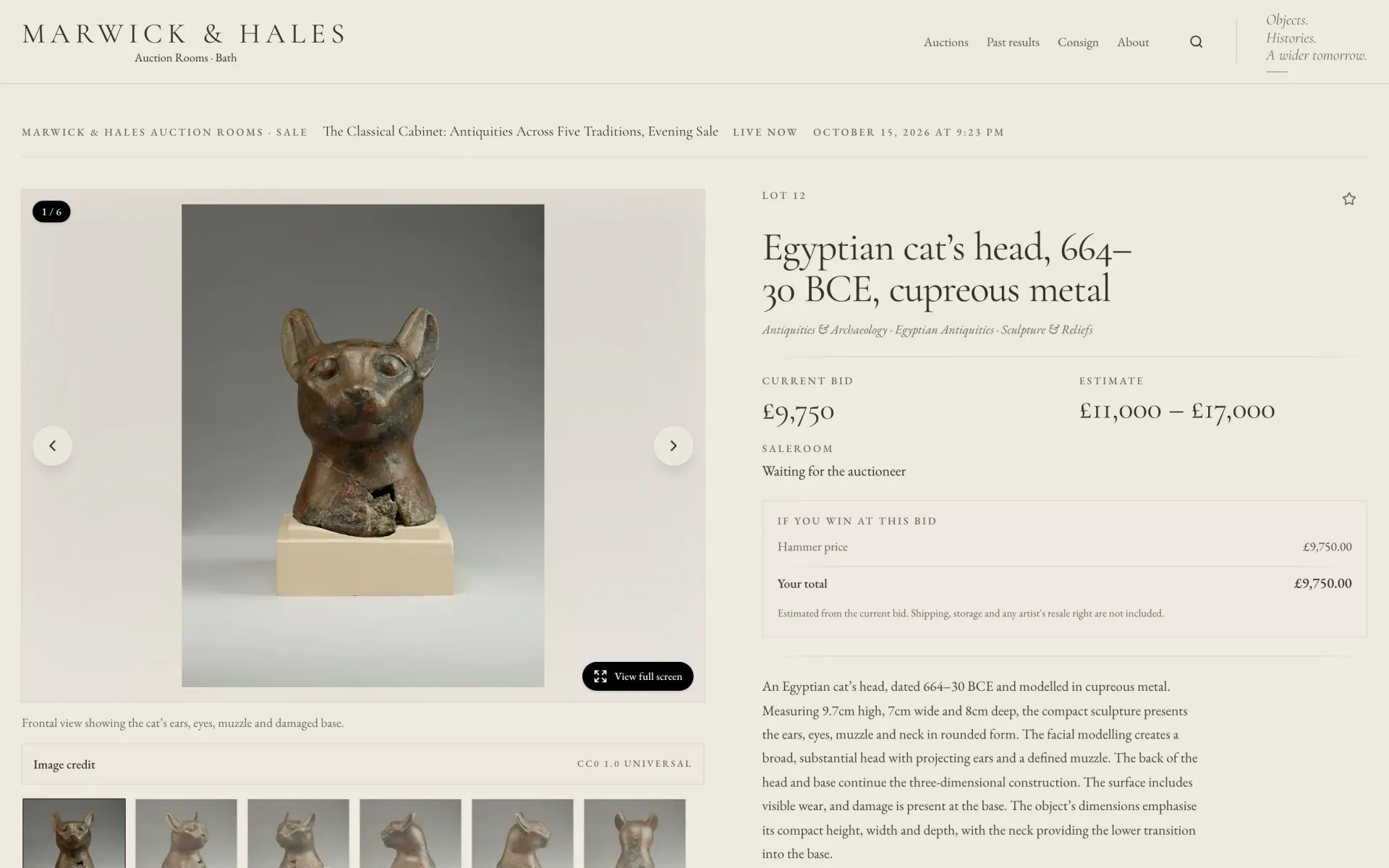
Published as the lot page on your own website.
Culture and period, carefully qualified
Your title keeps the culture, the period and every qualifier exactly as you write them, so 'circa 2nd century AD' stays where you put it.
Details in your terms
Material, dimensions and any later mount in a details table you label yourself, with literature and exhibition history alongside.
Provenance where bidders read it
The ownership history, with dates and named collections, has its own field, and restoration the condition field. Both show on the lot page.
Photographs and a specialist
Every side, the base and any old label, shown full screen. Each lot names the specialist for its department, with a way to write to them.
Bring the room and online bidders together
Keep your rostrum and your regulars. You or your clerk run the sale from one console, and every bid, from the room, online or left in advance, lands on the same lot.

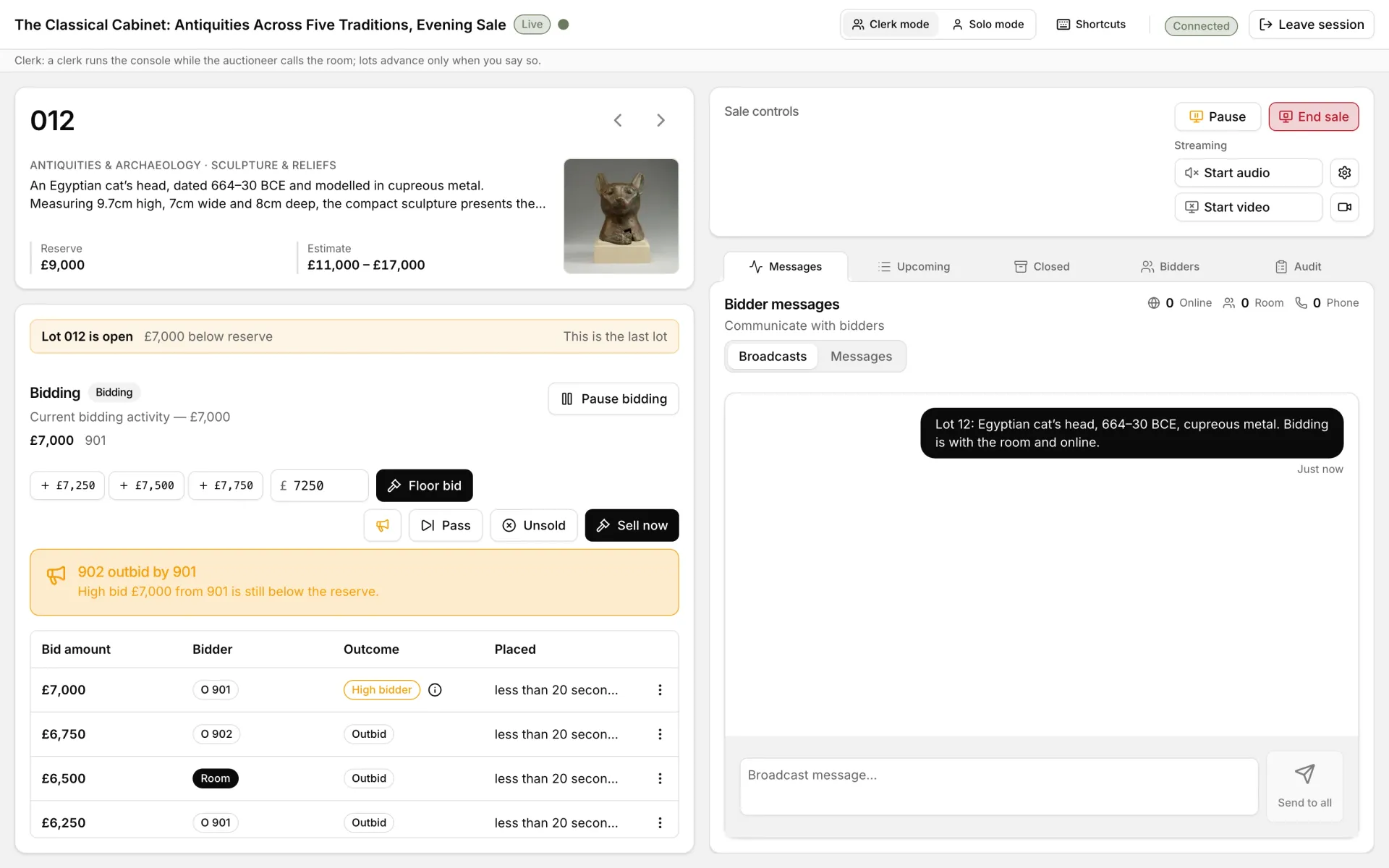
The auctioneer's view: the lot on the block, bids from the room and online, and the next increment. Online bidders watch the rostrum on live video.
Clerk or solo
A clerk enters floor bids while you take the room, or one person does both. Lots advance only when you say so.
Absentee bids, both ways
Bidders leave a maximum online, and your staff enter the commission bids taken by email, so the console bids for them up to their limit.
Your increments, your premium
Bid in the increment table your house already uses, with your own buyer's premium shown to bidders before they bid.
Your bidders bid with you
On a laptop or a phone, your bidders follow the same lot and the same bid as the room, in your colours and under your name.
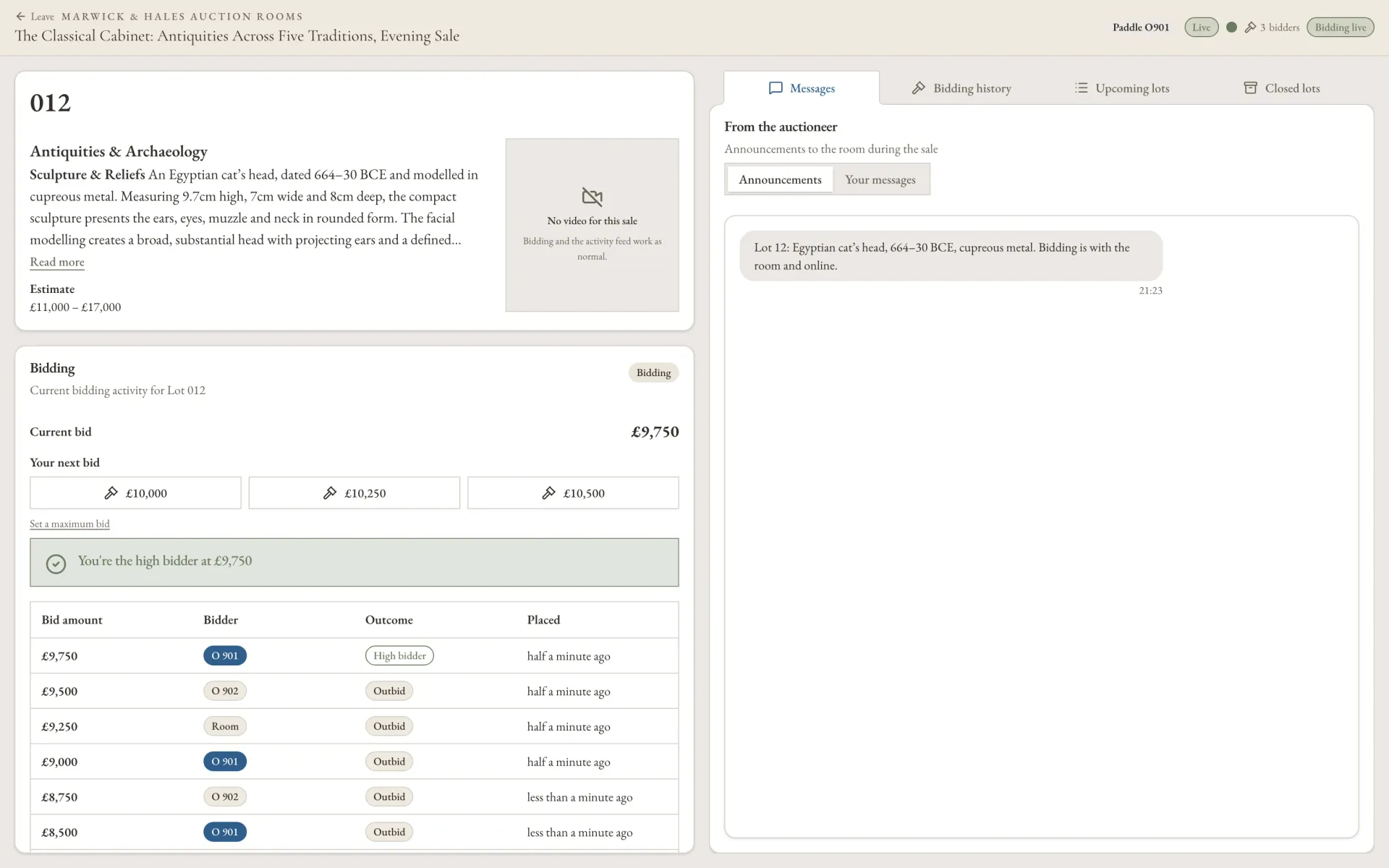
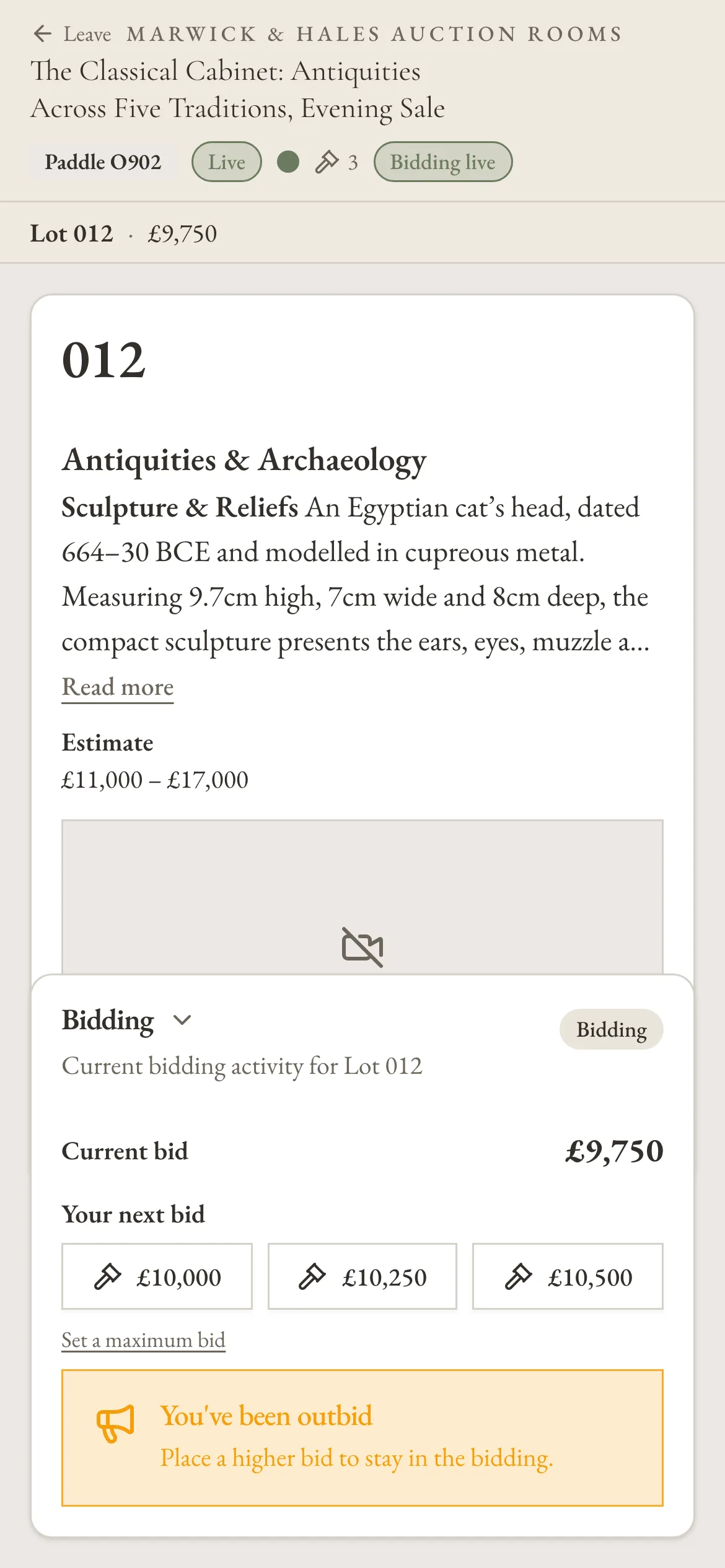
The bidder's view of the same lot, on a laptop and on a phone.
Registered with your house
Bidders register for each sale with you. You approve them and assign paddles, so you know who is buying before the sale opens.
Timed sales that close fairly
A late bid extends the close, so a bronze is not lost to a last-second bid.
A reason to come back
A watchlist with reminders before a sale ends, and your prices realised kept as a public record of what sold.

Your name and domain. Your bidders and records.
Auctionomy is the platform behind your house, never in front of it.
- Your website stays on your own domain, in your own colours and type.
- Bidders register with you, and their records stay yours.
- Your buyer's premium and your conditions of sale are your own.
- Bidders see your house. Auctionomy stays out of sight.
A flat subscription. No commission on the hammer.
Auctionomy is paid for by the house, not taken from the sale, so a strong evening costs nothing more than a quiet one. Founding partner pricing is available while the platform is young.

From first conversation to first sale
- 1
Talk to us
Tell us how your house sells today: timed, live or both, and what you want online.
- 2
We set up your house
Your website, catalogue, increments and terms, set up with you.
- 3
Run your first sale
Your team runs it, under your own name and on your own domain.

Bring your house online
Your website, your catalogue, your sales and your bidders, under your own name.