References identify the piece
Spink numbers for British coins, RIC or Sear for ancients, Pick numbers for world banknotes: the reference tells a bidder exactly which type and variety is on offer.
Markets · Coins, Banknotes & Medals
Numismatic bidders bid on references, grades and details they can verify from the photographs. Auctionomy gives each coin, note and medal the fields to state them, on your own branded site.
How your bidders buy
Spink numbers for British coins, RIC or Sear for ancients, Pick numbers for world banknotes: the reference tells a bidder exactly which type and variety is on offer.
Bidders read Fine, Very Fine and Extremely Fine, or a numerical grade on the 1 to 70 scale for encapsulated coins and notes. Raw and slabbed pieces are bought differently, and the lot must say which it is.
A campaign medal is bought on the name, number and unit it was issued to, whether the naming is officially impressed, and what the research shows. Edge bruises and contact marks are stated, not hidden.
Catalogued your way
Description, estimate, condition and provenance are separate parts of every lot on Auctionomy, and each one shows on the lot page. The entry shown here is an illustration, written the way the trade writes it.
Illustrative lot · fictional
Young head left, reverse crowned shield within wreath, S mintmark below. A Sydney Mint issue of the imperial design.
Estimate A$1,200–1,600
Your sale on Auctionomy
Put the reference, metal, weight and grade in the description, the faults in the condition note and the collection history in provenance. Each sits in its own place on the lot page.
Add as many images as a lot needs: both faces, the edge or naming, and the holder label for an encapsulated piece.
Arrange the catalogue your way, by country, ruler, denomination or campaign. Bidders filter by your categories and search the whole catalogue.
Set your own increment table and let bidders leave absentee limits. Timed sales extend the close when a late bid lands.
Your trade, your house
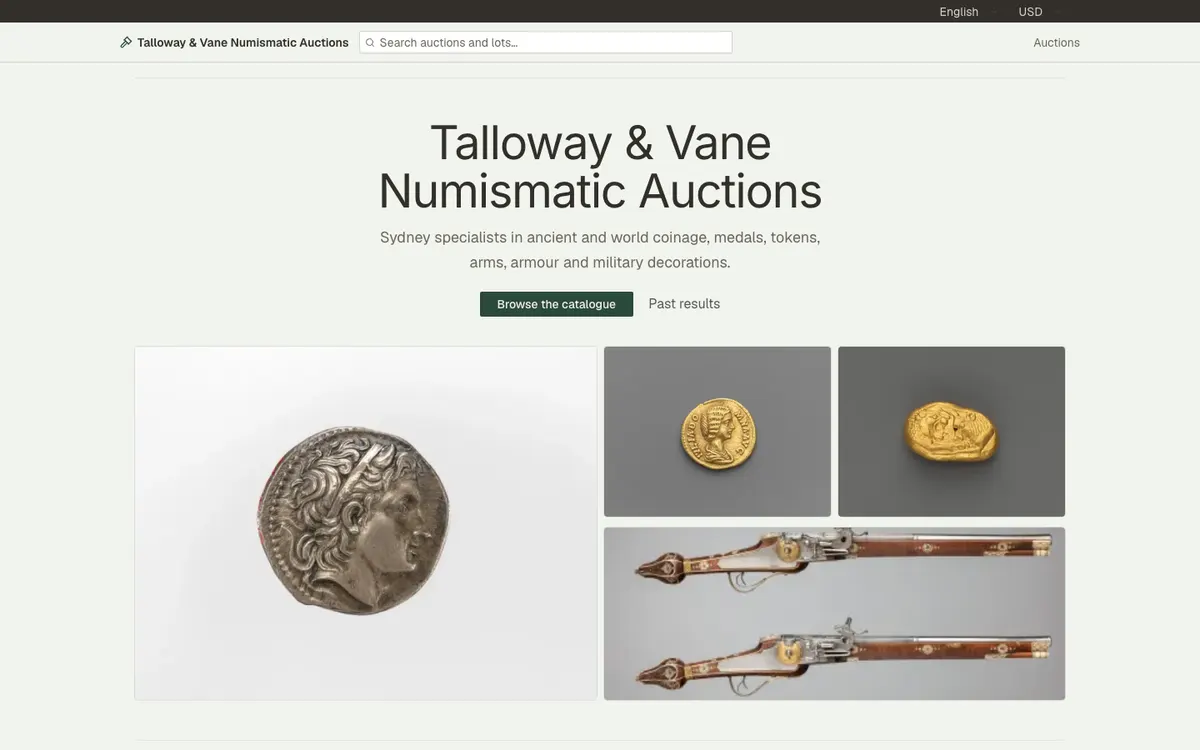
Talloway & Vane Numismatic Auctions is a demonstration house: fictional, built on Auctionomy to show how a house specialising in coins, banknotes & medals looks on the platform. Its name, colours, typeface and page layout are its own, assembled from the same components every house uses. Yours would carry your name, your logo and your look, on your own domain.
A flat subscription, agreed with your house. Your bidders register with you, and the buyer's premium you set is yours.