Specimen, locality, size
A mineral is described by species and locality, a meteorite by name, classification and weight, a fossil by taxon and formation. Dimensions are expected on every lot.
Markets · Natural History, Science & Curiosities
Natural history bidders want the specimen named, its locality and size, and confidence that it can be sold. Auctionomy gives every lot the fields to say so, on a website in your house's own style.
How your bidders buy
A mineral is described by species and locality, a meteorite by name, classification and weight, a fossil by taxon and formation. Dimensions are expected on every lot.
Meteorites and fossils found in Australia need a permit to leave the country, and some shells and animal material fall under CITES. Bidders expect the house to have checked.
Microscopes, telescopes and surveying instruments are bought on maker, date and completeness, and sit in their own section of the catalogue.
Catalogued your way
Description, estimate, condition and provenance are separate parts of every lot on Auctionomy, and each one shows on the lot page. The entry shown here is an illustration, written the way the trade writes it.
Illustrative lot · fictional
Deep blue bladed azurite crystals to 1.5cm on a bed of botryoidal malachite. 9 x 6 x 4cm. With an old collection label.
Estimate A$300–500
Your sale on Auctionomy
Put the locality and collection history in provenance and damage or restoration in the condition note. Both show beside the estimate.
Add images from every side, with a scale bar or in the hand, as many as the specimen needs.
Define categories for minerals, meteorites, fossils, shells and instruments. Bidders filter by them and search across the catalogue.
Bidders register with your house and you approve each one, so you know who is bidding on material with export conditions before the sale.
Your trade, your house
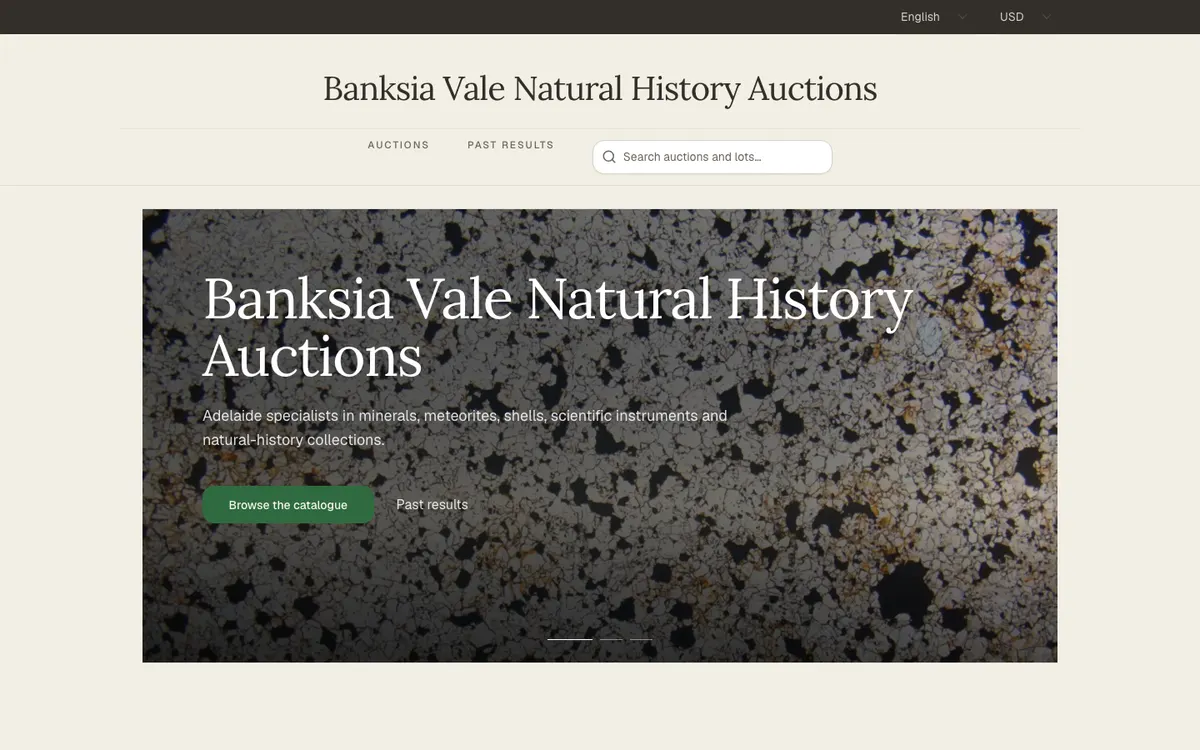
Banksia Vale Natural History Auctions is a demonstration house: fictional, built on Auctionomy to show how a house specialising in natural history, science & curiosities looks on the platform. Its name, colours, typeface and page layout are its own, assembled from the same components every house uses. Yours would carry your name, your logo and your look, on your own domain.
A flat subscription, agreed with your house. Your bidders register with you, and the buyer's premium you set is yours.